Wings and Nachos Are Messy—What Are Cleaner Game Night Snacks?
Wings and nachos have earned their place in game-day lore. They are delicious, shareable, and—if you have ever tried to keep score while wiping barbecue sauce off a card—capable of turning a perfectly good game night into a cleanup shift. The good news: you do not have to choose between a satisfying spread and a table you can still use for board games.
The trick is to plan for hands, surfaces, and attention spans. Choose finger friendly snacks that hold together, set drinks where they cannot tip onto the board, and give the party a clear home base. Then use the football broadcast as your event clock: kickoff, quarter breaks, halftime, and the final whistle all make useful cues for food and games. It is a simple easy party snack swap—and a practical way to avoid greasy residue without making the gathering feel overly precious.
Make One Room the Party’s Home Base
In a small apartment or a busy family home, letting the party wander can create more work than the snacks themselves. People drift between the kitchen, living room, and dining area; plates collect in odd places; and game pieces mysteriously migrate to the couch cushions. (I have a longstanding policy: pieces stay on the table.) Contain the party to one room as much as your layout allows.
Choose a space that can handle both watching and playing. Put the main game table within view of the screen, or arrange seating so guests can easily turn toward the broadcast. A sideboard can hold the food, napkins, serving utensils, and spare coasters. That gives people a clear place to grab a bite without setting a plate on the game board.
At the door, assign a coat spot immediately. It keeps jackets from landing on chairs that someone needs, and it makes the room feel organized from the start. Then put coasters wherever people are likely to set down a drink. I keep a stack ready like it is a sacred ritual; it is a lot easier to prevent a ring on the table than to explain one after the game.
Give Every Surface a Job
- Game table: Games, player areas, and drinks in designated spill-resistant spots.
- Sideboard: Snacks, plates, napkins, and refills.
- Cooler: Chilled drinks, positioned away from game components and walkways.
- Entry area: Coats and bags, so they do not take over seating.
One surface, one purpose is a small rule with a big payoff. In particular, do not put the drink station over the board. People will refill over whatever is directly beneath the bottle, and game cards are not built to survive a splash of soda or beer.
Choose Snacks That Stay Put
The best cleaner snack is not necessarily the healthiest or fanciest one. It is the one guests can pick up without leaving oily fingerprints, shedding crumbs over the player mats, or needing both hands and a stack of napkins. Look for food that is portioned, sturdy, and easy to eat between plays—or during a commercial.
Cleaner Swaps for the Usual Game-Day Spread
Instead of Try Why it works for game night Saucy wings Oven-roasted chicken bites with sauce served on the side Less sauce on fingers; guests can use a cocktail pick or fork. Loaded nachos Individual cups of tortilla chips with a small serving of toppings Portions stay contained, and guests are not reaching across the board. Greasy chips Pretzels, breadsticks, or lightly seasoned popcorn They are easy to portion and generally leave less oily residue. Drippy sliders Mini sandwiches with firm fillings and condiments on the side Smaller, neater bites are easier to manage during a quick break. Shared dip bowl Individual cups of hummus, bean dip, or ranch with cut vegetables Each person has a tidy portion and a clean place to dip. Loose candy or nuts Small bowls or paper cups of trail mix, grapes, or wrapped sweets Portioning makes snacks easier to carry and keeps them off game components.Individual portions are especially helpful for dips and toppings. A bowl of salsa beside an open game is an invitation for a chip to snap in half over the cards. Put toppings in small cups, keep serving spoons on the sideboard, and leave enough room for people to set down a plate before they sit.

For a fuller spread, think in textures: something crisp but not powdery, something fresh, and one more substantial option. A tray of cucumber rounds, snap peas, and bell pepper strips can balance a bowl of pretzels and a platter of mini sandwiches. Cheese cubes or firm cheeses are usually easier to handle than a soft cheese that slides off a cracker. Keep dips thick, serve them in small portions, and place napkins close by.
Use Football as the Event Clock
One common hosting mistake is planning games and food as if the broadcast were just background noise. It is not. An NFL game has natural attention shifts: guests may focus closely on a drive, look away during a break, and gather again at halftime. Commercials and quarter breaks are useful windows for grabbing food, explaining a game, or resetting the table.
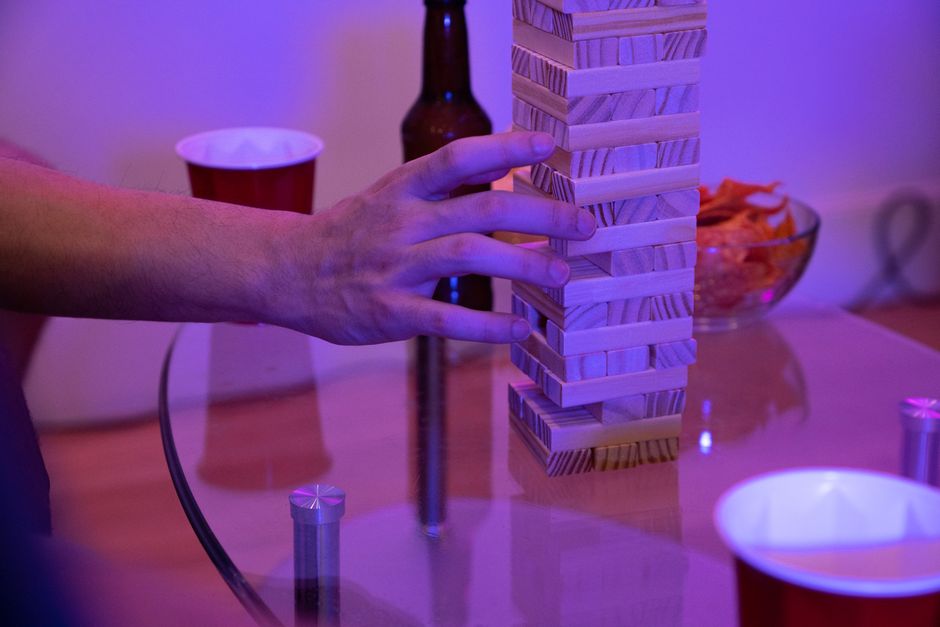
Use those windows instead of competing with the action. Set out the main snack spread before kickoff. Offer a quick, easy-to-eat option during the first break. Save a larger refill or a fresh platter for halftime, when people are more likely to get up and talk. Near the end of a close game, keep the food simple and already within reach; no one wants to miss a crucial play because the host is assembling a complicated snack.
Match Games to Attention Span and Time Windows
Not every game night needs one long, absorbing board game. Pick games that suit the rhythm of the room. A short party game can work during a pregame window or between activities. A longer strategy game is better when the group knows it has time to commit and is comfortable pausing during the broadcast. For a mixed crowd, have one quick game ready as the main event and a longer option available if interest holds.
- Before kickoff: Bring out a quick game with simple rules while guests arrive and settle in.
- During the game: Keep play light, or pause between drives if the group wants to follow the action closely.
- At halftime: Refill snacks, clear empty plates, and start a game that fits the remaining window.
- After the final whistle: Bring out a longer game if the group is still energized.
Explain the plan before play begins. “We’ll pause at halftime” is much kinder than stopping mid-turn when everyone is invested. If you are hosting people with different levels of interest in football, offer a game that is easy to join or leave. The goal is not to force every guest into the same activity; it is to make it easy for everyone to find a comfortable place in the room.
Keep Drinks Away from the Board
Spill-proof drink strategy starts with placement, not wishful thinking. Avoid setting drinks on the game surface if you can. Keep the cooler and refill station on the sideboard or another stable surface, and make a clear path to them. Guests should not have to reach across cards, dice, or a player’s carefully arranged pieces to get a refill.
For drinks that do belong near the table, use sturdy cups with lids where appropriate, or choose a cup style with a broad, stable base. Put a coaster at each seat before guests arrive. Keep a small stack of napkins within reach, but not in the play area where they can catch on components. If the table has built-in cup holders, use them; if not, make designated drink spots part of the setup.
- Do not pour or refill drinks over the board.
- Keep open bottles and pitchers on the sideboard, not among game pieces.
- Use coasters and stable cups, and leave a little space between drinks and components.
- Ask guests to move a drink before shifting the board or expanding the play area.
If the room is tight, serve drinks in smaller batches rather than putting a pitcher on the table. A cooler is useful for keeping extra beverages chilled, while a https://beerconnoisseur.com/host-holiday-game-night-without-taking-over-house/ sideboard can serve as the controlled refill station. That setup also limits the parade of people crossing through active play every few minutes.
Set Up the Table for Real Life
A dedicated game table can make hosting easier, especially when the dining table has to serve dinner, games, and everyday life. The Dresden, a board game dining table from Bandpass Design, is one example of furniture designed around tabletop gaming and dining. It is worth considering if your household often shifts between meals and games, but make sure any table suits your room, seating needs, and budget before buying.
One practical note: no prices were listed for The Dresden table or any products in the scraped text. So it would be misleading to quote a price or suggest a current cost here. Check Bandpass Design’s current product information directly for details, availability, and pricing.
Whatever table you use, prepare it before the first guest arrives. Set out the game you plan to play, but keep other boxes put away until needed. Too many game boxes dumped out at once make the room feel cluttered and turn choosing a game into another task. Put extra components in a tray or organizer, and keep the food on a separate surface.
A Simple, Cleaner Game-Night Checklist
- Assign a coat spot as guests arrive.
- Contain the party to one room, with clear places for games, food, and drinks.
- Choose finger friendly snacks that are portioned and not overly greasy.
- Serve saucy or crumbly items in individual portions, with sauces on the side.
- Use the football broadcast as an event clock for breaks, refills, and game changes.
- Match each game to the group’s attention span and the time available.
- Keep drink refills on the sideboard, use coasters, and never pour over the board.
- Bring out one game at a time, and keep stray pieces off the couch.
The Best Swap Is the One That Fits Your Crowd
Cleaner game-night food does not have to mean a fussy menu. A few smart substitutions—individual dip cups, sturdy mini sandwiches, pretzels, cut vegetables, and chicken bites with sauce on the side—can make a noticeable difference. You can still serve the flavors people expect; just give them a format that is less likely to coat hands, cards, and tabletops.
Give the room a layout, let the NFL broadcast set the pace, and keep the game table clear enough to play on. With snacks on the sideboard, drinks at a safe distance, and a game that fits the moment, you can enjoy the gathering instead of spending the fourth quarter rescuing your components from crumbs.